Sculpture, not painting
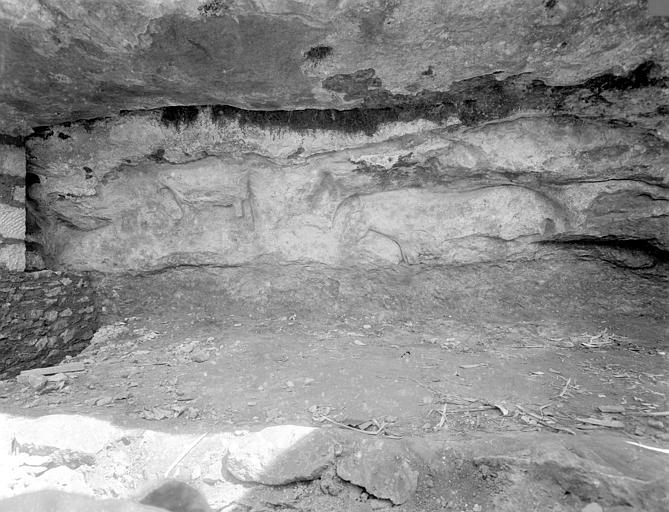
The Cap Blanc shelter, at Marquay in the Dordogne, holds what is described as the most monumental wall sculpture known from the Palaeolithic. Where the famous caves nearby are painted or engraved, here the artists worked the rock like stone carvers.
A frieze thirteen metres long runs along the wall. Life-size horses, the largest of them more than two metres long, are cut in high relief into the limestone, some standing out thirty centimetres from the background. Bison and deer complete the scene. The whole composition is about 15,000 years old and belongs to the Magdalenian period.
A worksite, not a drawing
The technique is remarkable. To obtain such volume, the artists had to clear the rock around each animal with flint picks, over several square metres. It is, in every sense, a building site.
The 1911 excavation also uncovered a female burial at the foot of the frieze.
Visiting the shelter
Cap Blanc is part of the prehistoric sites of the Vézère valley, a UNESCO World Heritage property, and is visited in small groups. Booking online is compulsory, and numbers are limited to protect the shelter. The visit lasts about an hour.
- The shelter is reached by a sloping forest path.
- The temperature inside is 15 to 18 °C, so bring a warm layer.
- Photography and bags are not allowed.
It combines naturally with the engravings and paintings of Font de Gaume and Les Combarelles, and with the National Museum of Prehistory in Les Eyzies. For a full plan, see our Vézère valley weekend.
Practical information was checked in October 2026: please confirm opening times and book on the official website before your visit.